The Psychology Behind Falling for Someone Online



The Psychology Behind Falling for Someone Online
Falling for someone online often feels faster, deeper, and more intense than falling for someone offline. In 2025, this is not accidental—it is psychological. Digital environments amplify specific emotional mechanisms that make attachment form quickly, sometimes before two people ever meet.
Understanding these mechanisms explains why online connections can feel so real—and why they can also feel confusing or overwhelming.
1. The Brain Fills in the Gaps
Online interaction provides limited information: messages, voice notes, curated photos. The human brain naturally completes missing details by projecting ideal traits onto the other person.
This is called idealization bias.
When information is incomplete, imagination does the work—and imagination often favors hope over reality.
2. Text-Based Communication Feels Emotionally Safer
Without physical presence, people feel less judged. This leads to:
More self-disclosure
Faster emotional openness
Deeper conversations earlier
Psychologically, vulnerability builds intimacy. When two people share thoughts they rarely say out loud, emotional bonds accelerate.
3. Consistency Creates Attachment
Good morning texts. Night check-ins. Quick replies.
The brain interprets consistent communication as reliability, which activates emotional security. Over time, this pattern creates attachment—even if no physical relationship exists.
Attachment forms through presence, not proximity.
4. Dopamine Reinforcement Is Stronger Online
Notifications trigger dopamine—the same reward chemical associated with pleasure and anticipation.
Unpredictable replies (sometimes fast, sometimes delayed) intensify this effect. This variable reward system mirrors gambling psychology and strengthens emotional fixation.
It is not just attraction—it is conditioning.
5. Emotional Intimacy Often Precedes Reality
Online connections frequently reverse the traditional order:
Emotional closeness first
Physical reality later
This creates a sense of deep knowing that may not yet be grounded in real-world behavior. When reality arrives, the emotional investment is already high—making disappointment more painful if expectations are not met.
6. Shared Vulnerability Feels Like Destiny
Late-night conversations, personal confessions, and shared struggles create the illusion of rarity.
Psychologically, when someone sees our inner world, the brain interprets it as special—even if the context is digital.
Intensity gets mistaken for compatibility.
7. Lack of Physical Data Skews Judgment
Offline, we assess:
Body language
Tone shifts
Micro-expressions
How someone treats others
Online, these signals are missing. This limits reality checks and delays the detection of incompatibilities.
The mind bonds faster than logic can intervene.
8. Loneliness Amplifies Emotional Investment
When someone enters your life during emotional vulnerability or loneliness, the bond strengthens disproportionately.
The brain associates relief from loneliness with the person—not the timing. This makes the connection feel uniquely meaningful.
9. Fantasy Feels More Controllable Than Reality
Online relationships allow:
Curated interaction
Avoidance of conflict
Ideal timing
This sense of control reduces anxiety and increases comfort, making the connection feel “easy” compared to real-world dating—with its unpredictability and friction.
The Psychological Reality Check
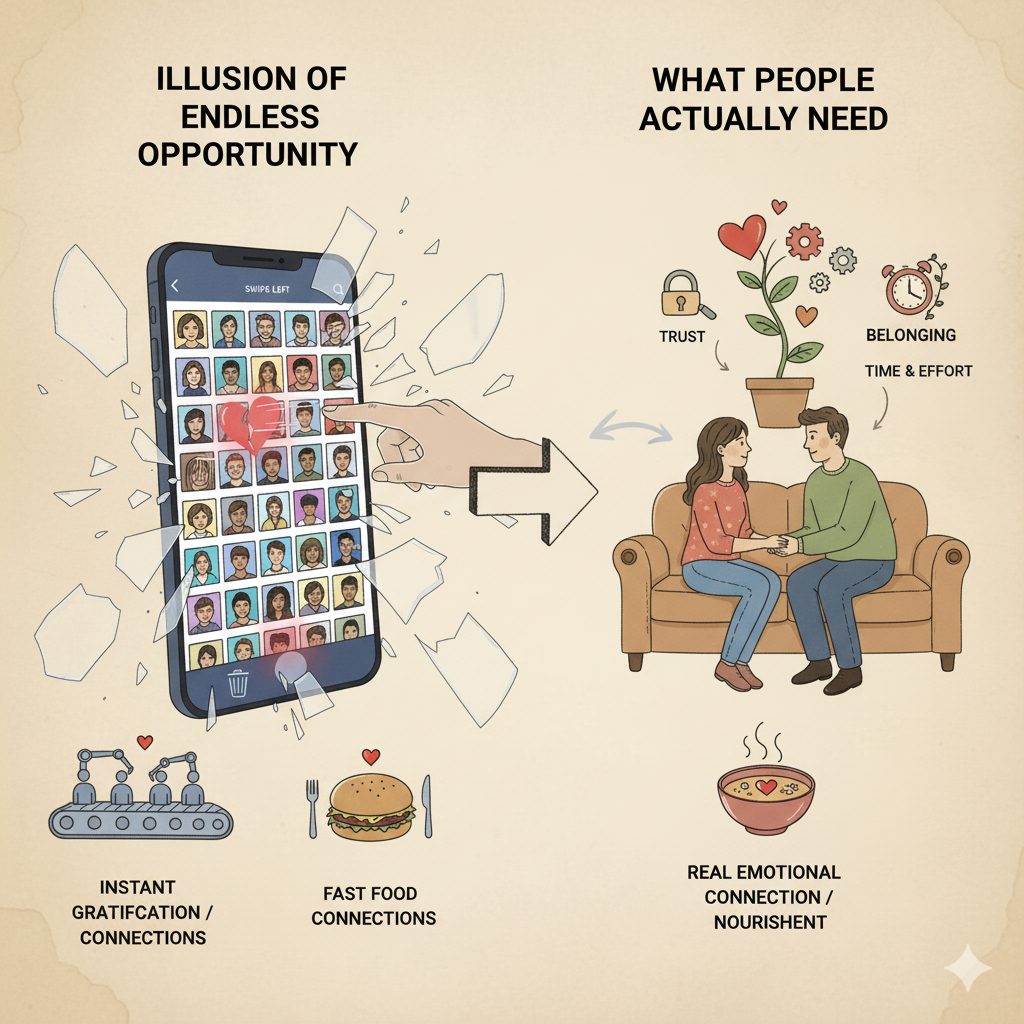
Falling for someone online is not fake. The emotions are real. The chemistry is real.
What requires caution is confusing emotional intensity with long-term compatibility.
Healthy online connections eventually move toward:
Real-world interaction
Behavioral consistency
Shared lived experiences
Emotion creates the spark—but reality sustains the relationship.
Final Thought
Online love works on the brain’s strongest pathways: imagination, consistency, vulnerability, and reward.
That is why it feels powerful.
That is also why it must be grounded carefully.
In 2025, understanding the psychology behind online attraction is not about protecting your heart from feeling—it is about protecting it from illusion.


Comments
Post a Comment